On the Côte d'Azur, a hotel, a villa, a yacht broker or a fine-dining restaurant is judged on its social channels before anyone picks up the phone. And the judgement is unusually harsh, because the audience compares you not to the business down the road but to the standard set by international luxury houses. Community management in Nice, for this clientele, is far less about frequency than about whether every published image survives that comparison.
This article addresses the visual and editorial standard specifically. It is written for brands whose customers arrive from London, Milan, Geneva or the Gulf, and for whom a mediocre photograph costs more than a missed post.
Why posting less often performs better here
In most markets, consistency of volume drives results. In the luxury segment the relationship inverts past a certain point. A feed publishing daily with uneven material reads as a business that needs attention. A feed publishing three or four times a month, every image at the same level, reads as a business that has nothing to prove.
The practical implication is budgetary rather than editorial: money that would go into volume goes into production quality instead. One properly directed shoot per quarter, yielding a small number of excellent assets, outperforms twelve improvised posts.
The image standard, in concrete terms
"High-end" is a vague word. What it means operationally is a set of decisions repeated identically across every asset:
- Consistent colour grading. One grade, applied to every image and every film. Nothing signals amateurism faster than a feed where each photograph has its own colour temperature.
- Controlled light. Riviera daylight is beautiful and merciless. Interiors shot at the wrong hour look flat regardless of the room's quality.
- Composition that leaves space. Crowded frames read as commercial. Negative space reads as confidence.
- Restraint in motion. Slow, stable camera movement. Aggressive transitions and heavy music are the fastest way to move a brand down a tier.
- No stock imagery. Ever. A borrowed image of the Baie des Anges tells a prospective client that you had nothing of your own worth showing.
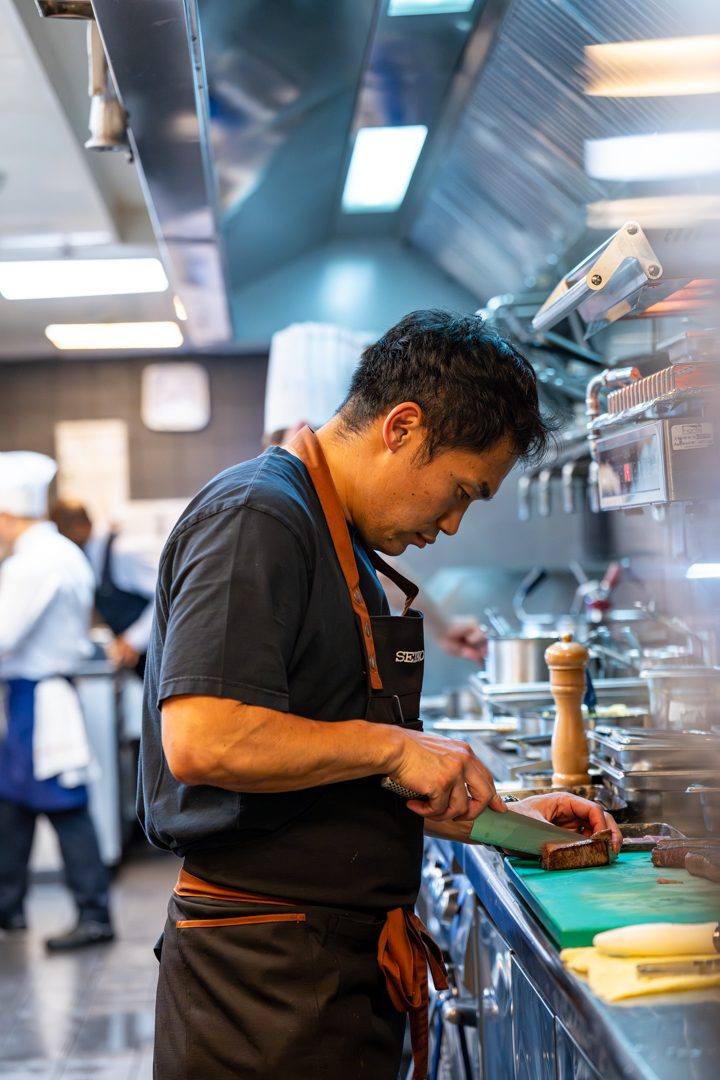
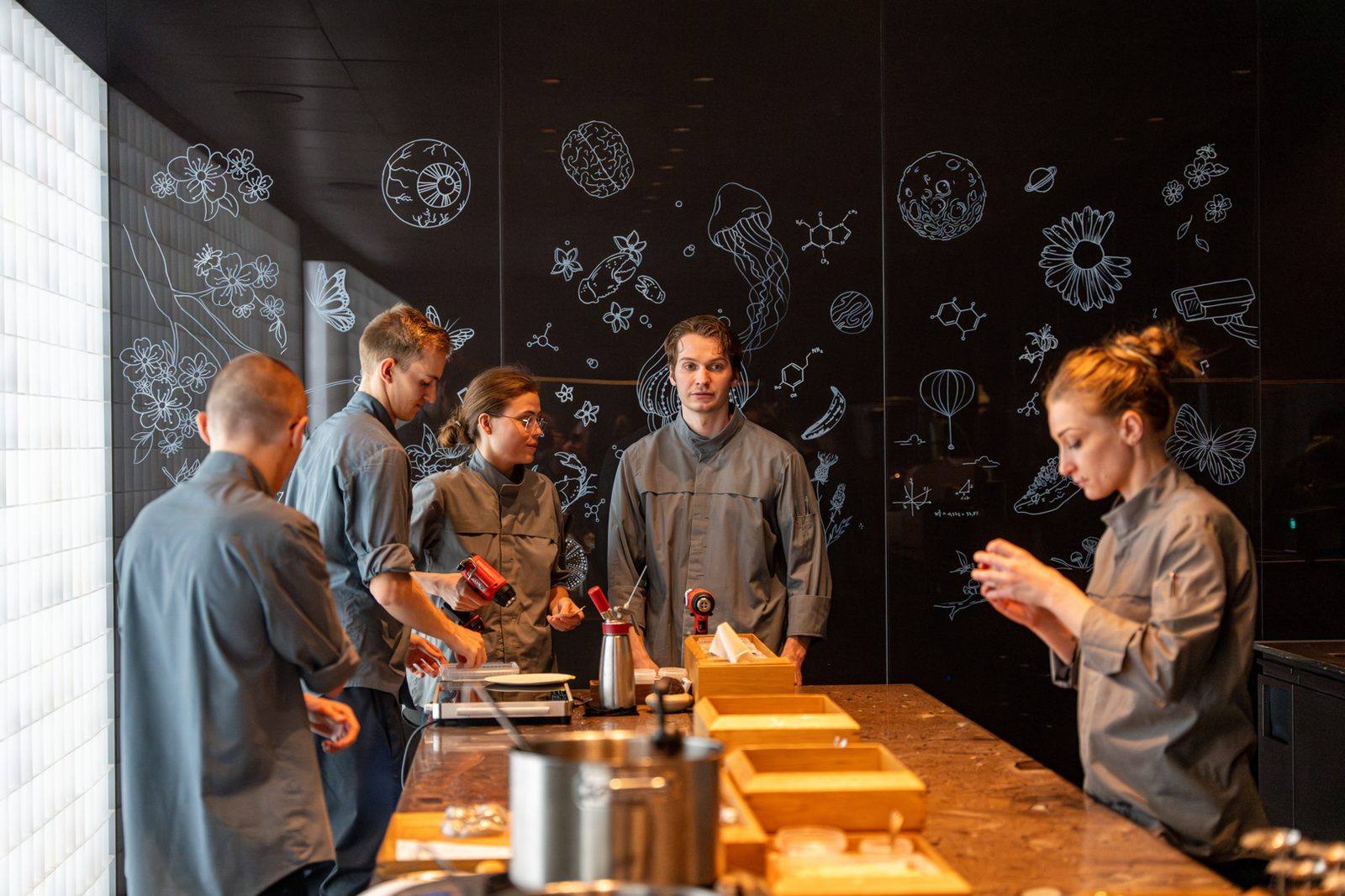
These are the same principles that govern our work with haute gastronomy and luxury clients, where the photograph is frequently the only thing a guest sees before booking.
Discretion is part of the brief
A dimension that rarely appears in social media guides but dominates work on the Riviera: your clients often do not want to be visible. Private guests, private events, private vessels. Filming a venue full of recognisable faces is not a creative opportunity, it is a liability.
The workable approach is to build a library of the property empty — rooms, terraces, light at different hours, materials, service details, the kitchen at work — and to treat guest presence as suggestion rather than subject. Silhouettes, hands, a table just left. It preserves confidentiality and, incidentally, produces more elegant images.
This also has to be contractual. Written authorisation for any recognisable person, a named approver on the client side, and a defined validation delay before publication. Agreed once, it prevents the recurring situation where a finished edit cannot be released.
Multilingual without dilution
The Nice audience is international by construction. The instinct is to publish in three or four languages. The result is usually a caption block so long it reads as administrative.
A cleaner solution: French and English in the caption, kept short, with additional languages handled where they actually matter — in direct messages, in the booking flow, in the reservation confirmation. Luxury clients rarely read captions. They look, then they write. Investing in the quality of the reply, in their language, returns more than a fourth translation of a caption nobody finished reading.
Answering as the house, not as a brand account
Tone in this segment is a competitive asset. Three rules cover most situations: reply in full sentences, never use exclamation marks or emoji in a first reply, and move any specific request to a private channel within one exchange.
Criticism deserves particular care. Defensive public replies do more damage than the original complaint. Acknowledge, offer a private channel, resolve there, and if resolution is reached, say so publicly in one line.
What actually indicates performance
Follower counts are close to meaningless for a business whose annual revenue may rest on a few dozen bookings. More telling: saves per post, direct messages initiated after a specific piece of content, referral traffic to the booking page, and the proportion of enquiries that mention something they saw.
That last one is worth asking explicitly in your enquiry form. It is the only reliable bridge between a feed and a signed contract.
Working with a production house rather than a content mill
Studio VingTrois operates from Reims and travels for its clients, in France and internationally. We work as a small integrated team — photography, film, drone, editorial direction — because the visual coherence this segment demands cannot survive being split across three suppliers. Our client work shows the standard we hold.
If your property in Nice deserves better images than it currently publishes, write to us. The first conversation is about what your clientele expects to see, not about a posting schedule.